
The Haunted Theater that Inspired “Enchanted Evening”
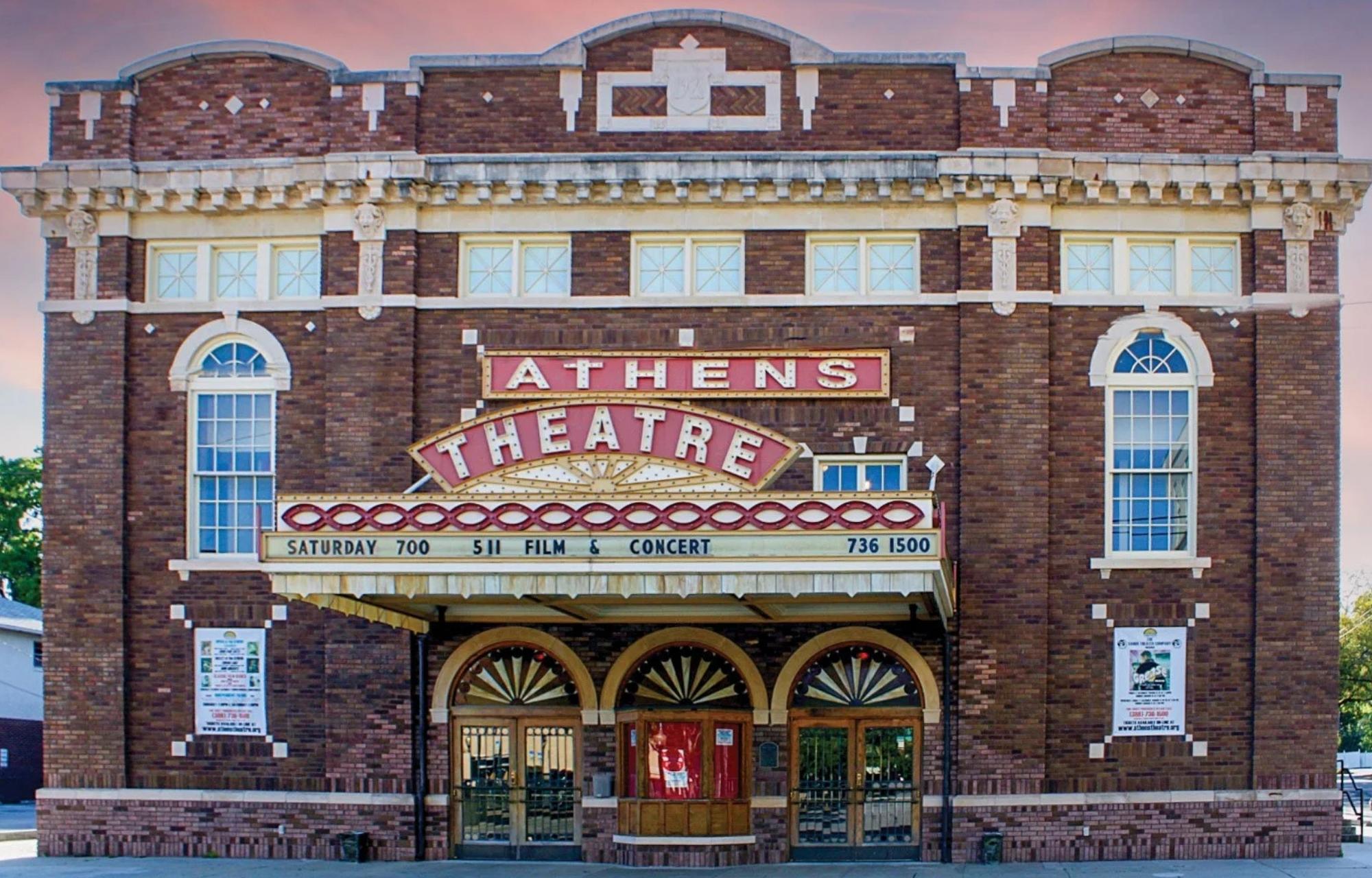
In my book Enchanted Evening, Marley Montgomery has tickets for a midnight matinee at the Parthenon Theatre. In real life, the Parthenon is a thinly veiled version of the Athens Theatre in DeLand, Florida, just a mile from my house.
Marley Montgomery, proprietor of the Enchanted Antique Shop, is ready for a spellbinding Halloween in her magical small town. But when a midnight matinee at the Parthenon Theater turns deadly, Marley finds herself entangled in a mystery worthy of the silver screen. Time literally stands still as Marley and her eclectic ensemble—from both sides of the veil—sift through secrets, lies, and shocking betrayals.
Every time I see a show at the Athens Theatre, I think about all the people who sat in the audience before me. I wonder how many of them are still there, watching shows from the other side of the curtain—and how many other spirits might be waiting in the wings.
I’m not alone in that thought, either. The Athens is rife with reports of ghosts and hauntings.
The Athens first opened its doors on January 6, 1922, when Warren G. Harding was president and Rudolph Valentino was starring in a silent movie called The Sheik. For years, the theater showcased vaudeville acts and silent movies. When talkies took over, it became a standard movie theater.
As time passed, however, the building deteriorated. Stripped of its art deco features, it truly was a shell of its former self, and it closed in the early 1990s.
It sat crumbling and vacant for almost twenty years, until community leaders decided to reclaim the landmark. They restored it to its former glory and reopened in 2009. Today, the theater hosts live productions, concerts, dance performances, and the occasional movie for old time’s sake.
The theater also houses regular appearances from ghosts and spirits.
Local legend says a former stagehand haunts the catwalk and the tech bay. Some cast and crew members have seen glimpses of past performers in the dressing rooms, and phantom audiences in the empty auditorium.
The Athens’ most frequent visitors, however, are Isaac and Maria, a brother and sister who make regular appearances during rehearsals and productions alike.
Cast and crew alike report encounters on a regular basis. Some have seen Maria with ribbons in her hair and a simple dress. Others have heard the siblings, loud and clear. During a production of the musical Jekyll and Hyde, the entire cast was onstage when they heard both children singing along in the wings.
Isaac and Maria typically like to frolic in the fancy box seats on the left side of the theater. They also run up and down the stairs that lead to the basement dressing rooms and storage areas. They open and close doors, dart across the stage during setup and rehearsals, and tinker with lights and sound equipment. When cast and crew members discover their antics, they also hear the children laughing.
They also get more active the later anyone stays at the theater. When the cast and crew work past midnight, Isaac and Maria get more and more boisterous.
According to the theater director, two teams of psychic investigators, working independently of each other, both reported encounters with Isaac and Maria. They called them by the same names, even though they weren’t working together. They also reported the same cause of death: a fire in the livery stable that stood on the site before the theater was built.
That aligns with the historical record. Cannon’s Livery Stable was a fixture at the site for many years, back when horses were an essential component of everyday life.
DeLand, like most towns in the late 1800s, was dotted with livery stables, all within walking distance of homes, hotels, and businesses. Livery owners catered to people who didn’t have barns or stables of their own, as well as travelers who arrived by steamboat and train. People could board their own horses, or rent the livery’s. They could even hire livery employees when they needed strong men for moving and delivery; the stables had freight wagons and willing workers.
There is no historical record of a fire at the livery—but here’s where it gets a little spooky. Back in the day, the DeLand Fire Department boarded their horses at Cannon’s Livery. What’s more, livery wagons were routinely called into service as hearses to carry caskets, too.
It’s possible that Isaac and Maria were victims of an accidental, fire-related death. In the days before electricity, when cooking and heating both relied on open flame, burns were an ever-present threat.
Perhaps Isaac and Maria were killed elsewhere, and simply hitched a ride home with the firefighters who tried to save them.