
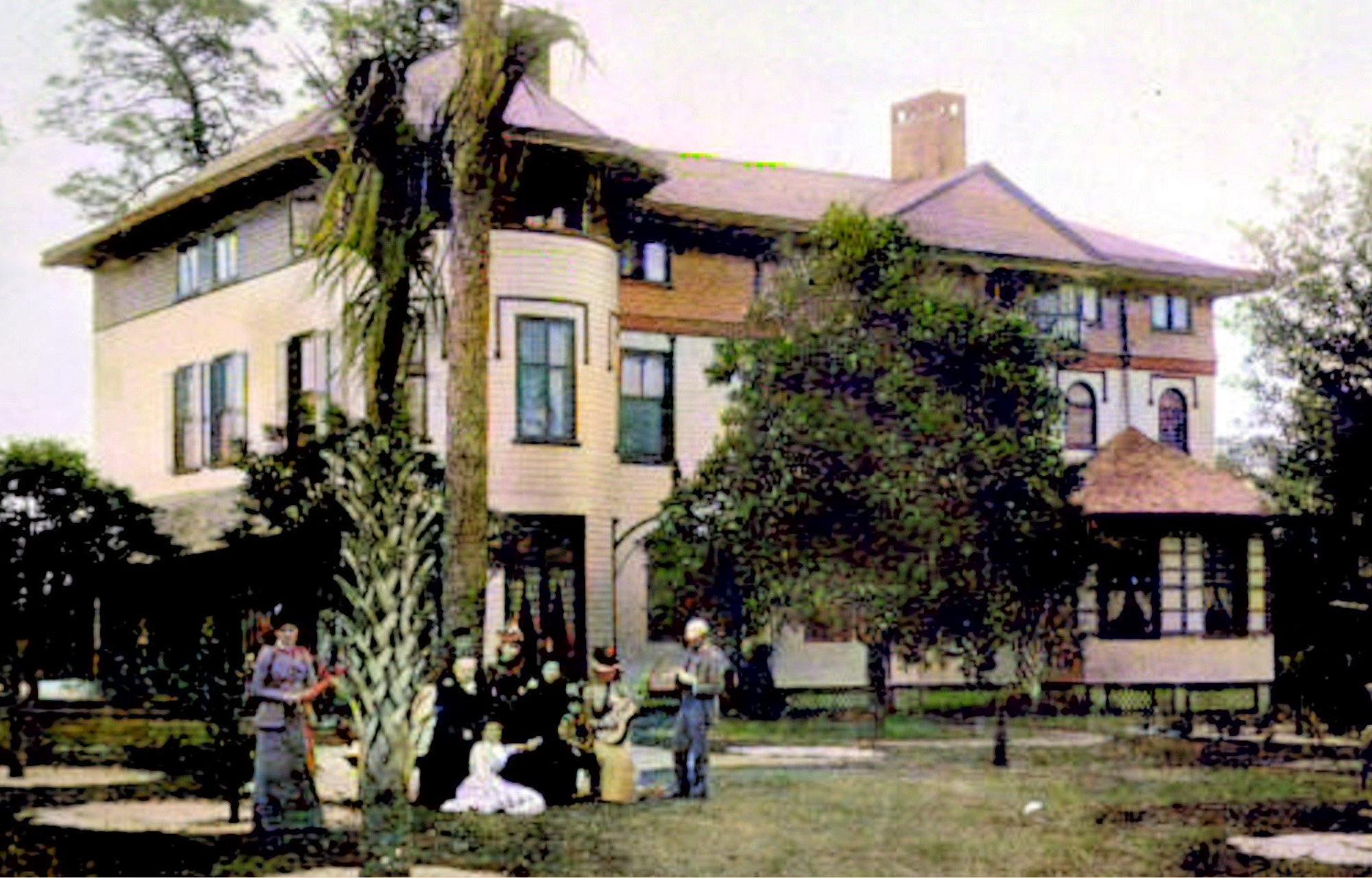
The House That Inspired Back in Time
The Stetson Mansion was the inspiration for one of the grandest houses in my Enchanted Antique Shop series—and for the setting of Back in Time. If you’ve ever wondered where some of Enchanted Springs’ Gilded Age glamour came from, this is it.
The lead ghost in the story was inspired by John B. Stetson himself: hatmaker, philanthropist, and world-famous entrepreneur.
The mansion was built in 1886 as Stetson’s winter home. Its architecture is a glorious mashup of influences—Victorian, Gothic, Tudor, Moorish, and more—which probably explains why it feels both stately and slightly theatrical at the same time.
The house was meant to impress, but it was also meant to be modern. Thomas Edison, a friend of Stetson’s, supervised the electrical installation, and the mansion is described as one of the first homes built with electricity in mind. The property still retains remarkable details, including intricate parquet floors and roughly 10,000 panes of leaded glass, many long associated with Tiffany.
Originally, John Stetson reportedly wanted something even bigger. His wife Elizabeth, who was less enchanted by Florida than he was, convinced him to scale it back to a mere three stories and just under 10,000 square feet. Even reduced, it hardly feels modest.
As visitors followed the winding drive through the wrought-iron gates, they once would have approached a true showplace. The mansion was built to entertain, and the Stetsons were famous for hosting grand parties and receptions there for local citizens and society guests alike. They invited Stetson university professors for dinner—when they weren’t entertaining President Grover Cleveland and King Edward VII.
After Mr. Stetson died, his wife Elizabeth closed up the mansion and returned north to bury her husband. For years, the DeLand estate sat quiet, with only a caretaker to look after it.
Inside, some guests have reported paranormal activity in the middle bedroom on the second floor. One woman reported that she was kissed while she slept there. A former owner saw ghostly ectoplasms going up the grand staircase, and often struggled with spirits who took over the electrical system and controlled television remotes and the lights on the third floor. Another visitor drew a picture of a nineteenth-century servant she saw in the parlor.
After the house left the family’s hands, it went through a long succession of uses and owners. Over the years, it served as a tearoom, a bed and breakfast, a restaurant, a museum, a music studio, and a piano school. It was ultimately restored and renovated in the early twenty-first century, and today it remains a private home that is often open for tours.
That, in a nutshell, is why the mansion was perfect for Back in Time.
It already had everything I could want: grandeur, eccentricity, social ambition, old money, new technology, and just enough ghostly shimmer to make the past feel like it never really left.