I’m not going to say Violet Serrano is my grandmother—but I’m not going to deny it, either.
In the Enchanted Antique Shop series, Violet Serrano is the spirited ghost of a 1920s flapper. She opens and closes almost every story in the series. And when I first envisioned her, she came drifting in on the scent of card games, cigarette smoke, and the echo of my grandmother Evelyn’s voice.
My grandmother Evelyn was short, sassy, and full of life. She liked to dance and play cards. She lived mostly on a diet of black coffee and Marlboro cigarettes, which fueled her to a ripe old age.
She was always sassy, even during the last few days of her life, when she would wake up, open one eye to look at her nurses, and grumble, “Dammit, I’m still here.”
She also had a way with language that stayed with me. She called people by nicknames like Pumpkin, and on her side of the family, almost everybody seemed to have a nickname. Babe. Sis. Toots. Butch. To this day, I’m not entirely sure I know all of my relatives’ real names on that side. They sounded less like an ordinary family and more like a lively cast of characters in an old movie — possibly one with a little Mafia energy around the edges.
My grandmother also had her own sayings, the kind that become family folklore. One of my favorites was, “Life is touch all over.” It was funny, wise, and slightly mysterious, which now strikes me as the perfect recipe for a memorable line. She also had a repertoire of 1920s and 1930s slang that made ordinary conversation sound like it had wandered out of another era.
That rhythm of speech found its way into Violet.
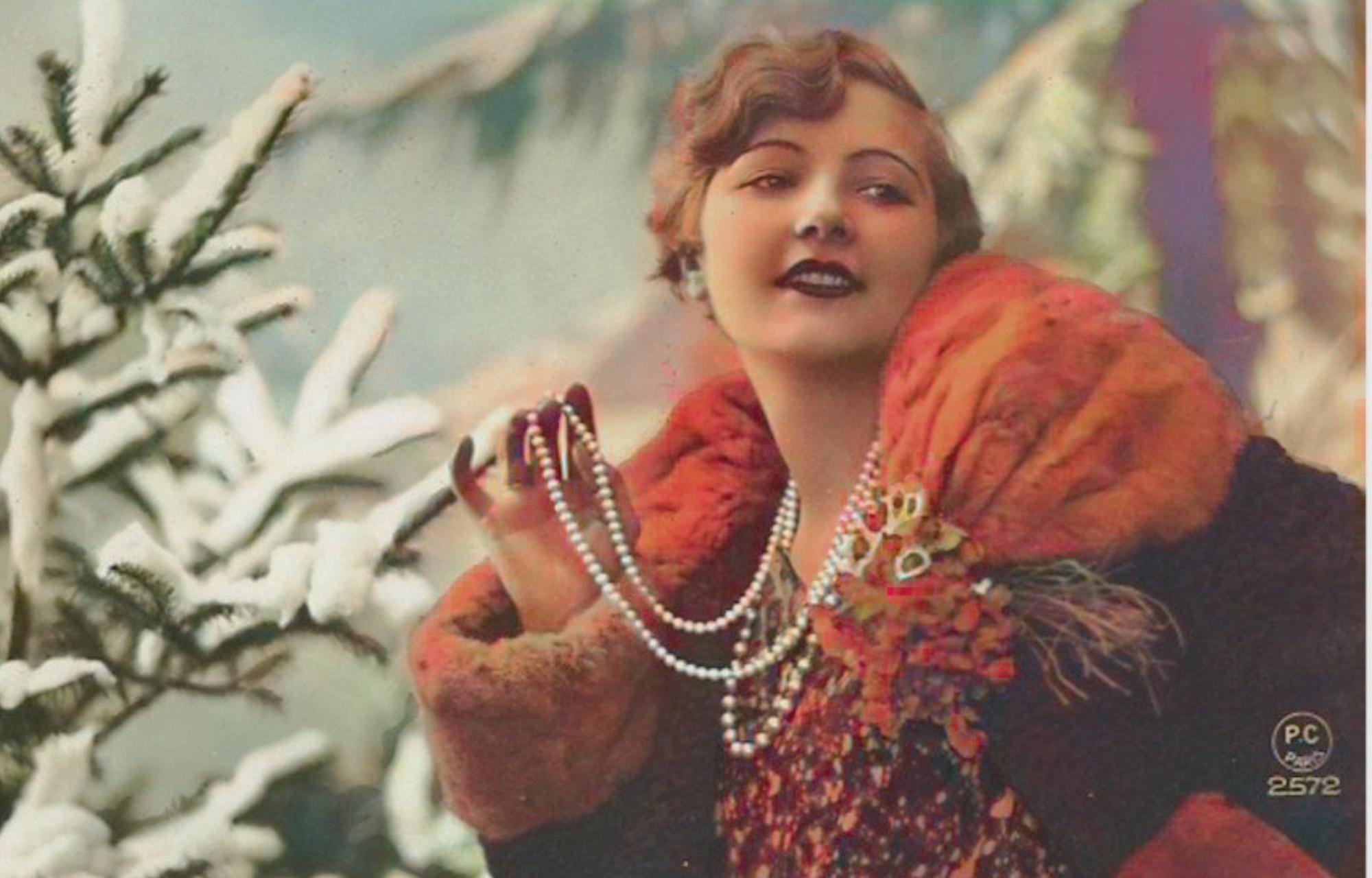
So did some of my grandmother’s glamour. Before she was the family matriarch with the nicknames and the cigarettes, she worked as a seamstress for wealthy women in a fancy department store. I know she made them look good, because she was honest: she would have told them which colors flattered their complexions, which styles suited their figures, and which dresses they should leave on the hangers.
When I write Violet, I’m not trying to recreate Evelyn exactly. Fiction rarely works that way. Instead, I’m borrowing energy, voice, attitude, and emotional truth. I’m asking what it would look like if some of that sass, humor, glamour, and resilience lingered on long after death — and then decided to haunt an antique shop.
That is how Violet was born.
She is playful in ways my grandmother was playful. She is outspoken in ways my grandmother was outspoken. She has a fondness for nicknames, for fun, for mischief, and for the kind of old-fashioned expressions that make people smile. She may be a ghost, but the life in her comes from someone very real.
I think that is one of the quiet mysteries of writing fiction. We imagine new people, but they are often stitched together from old loves, old losses, old family stories, and old voices we still hear in our heads.
Violet may belong to Enchanted Springs now.
But part of her will always belong to Evelyn.